




For mental health care, the biggest difference between HMO, PPO and EPO plans is how much freedom you have to see therapists outside the network. A PPO usually pays something toward out-of-network care, while HMOs and EPOs generally cover only in-network providers except in emergencies. Referrals, prior authorization and total yearly cost round out the choice.
Open enrollment for 2027 Marketplace plans runs from November 1, 2026 to January 15, 2027, so this is the moment to compare. This guide compares the three plan types only on the points that change how you get therapy or an intensive outpatient program (IOP).
This article is informational, not clinical or financial advice. Verify benefits directly with your plan and a licensed clinician before choosing coverage or starting treatment.
HMO vs PPO vs EPO for mental health: the short answer
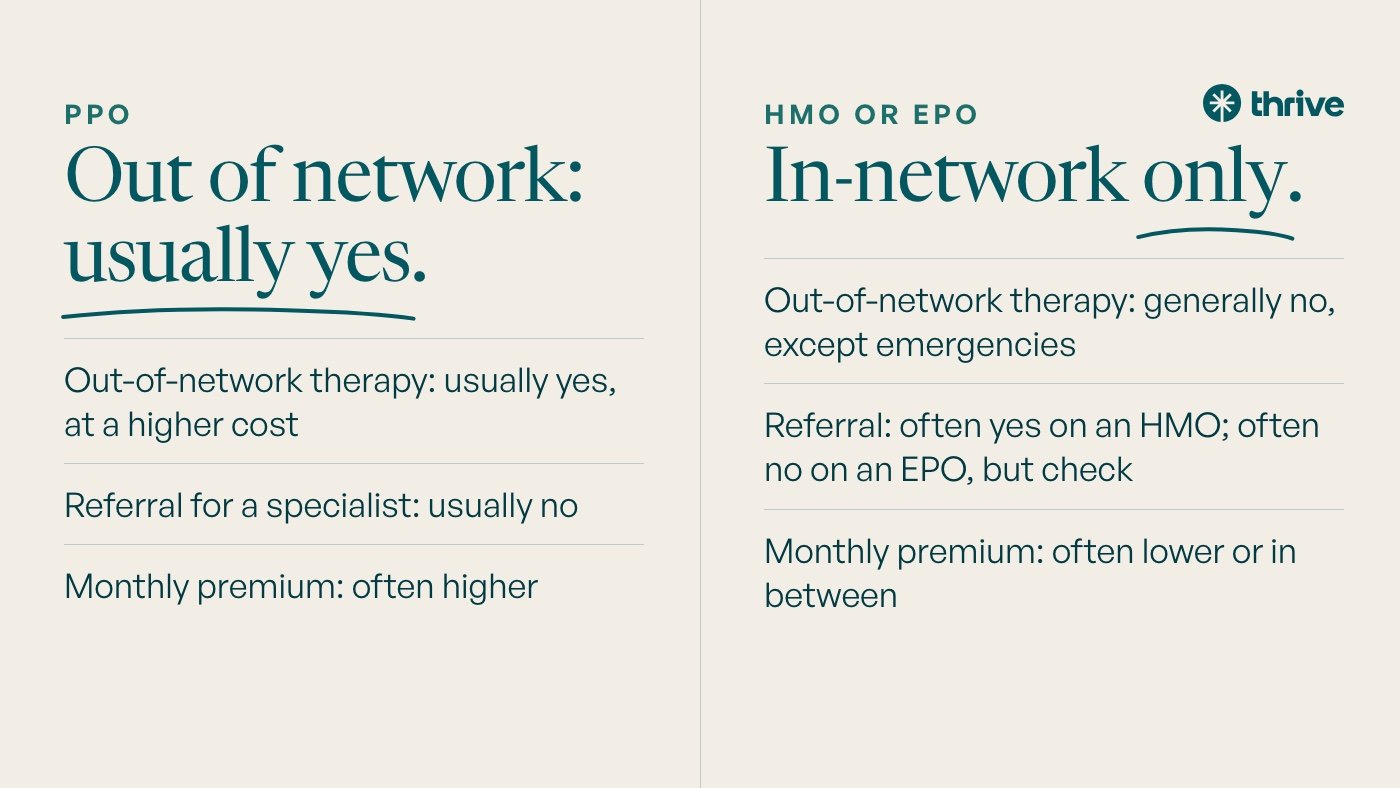
Here is how the three types usually compare. Individual plans can differ, so treat this as a starting map, not a promise.
| Question | HMO | PPO | EPO |
|---|---|---|---|
| Out-of-network therapy covered? | Generally no, except emergencies | Usually yes, at a higher cost | Generally no, except emergencies |
| Referral needed for a specialist? | Often yes | Usually no | Often no, but check |
| Prior authorization for IOP? | Usually yes | Usually yes | Usually yes |
| Network size | Often smaller, local | Often largest | Varies, often mid-sized |
| Monthly premium | Often lower | Often higher | Often in between |
| Best fit if | Your therapist and programs are in network | You want out-of-network options | You want lower cost without referrals |
What is the real difference between the three plan types?
HealthCare.gov describes each plan type on its plan and network types page. The core idea is how strictly the plan keeps you inside its network.
- HMO (Health Maintenance Organization): Usually limits coverage to providers who work for or contract with the HMO. It generally will not cover out-of-network care except in an emergency.
- PPO (Preferred Provider Organization): You pay less with network providers. You can see out-of-network providers without a referral, for an additional cost.
- EPO (Exclusive Provider Organization): Covers services only from network providers, except in an emergency.
- POS (Point of Service): A hybrid. You pay less in network and usually need a primary care referral to see a specialist.
A network is simply the group of providers your plan has contracted with. For mental health, the question is whether the therapists and programs you want are in it.
Do you need a referral to see a therapist?
A referral is a written order from your primary care doctor to see a specialist. HMO and POS plans are the types most likely to require one.
Many plans, including some HMOs, let you see an in-network mental health provider without a referral, while others still ask for one. Because the rules differ from plan to plan, check the plan’s summary before you enroll.
- If you already have a therapist: Check that they are in the network and whether a referral is needed to keep seeing them.
- If you may need IOP: Ask whether the plan requires a referral as well as prior authorization.
- If you dislike gatekeeping: A PPO or EPO usually means fewer steps before your first appointment.
Which plan types cover out-of-network therapy?
This is where PPOs stand apart from the other two types. A PPO is often the only one of the three that pays anything toward a therapist outside the network.
Even then, out-of-network care usually costs more than in-network care. You may face a separate deductible and higher out-of-network coinsurance, plus any amount above what the plan considers reasonable. Many therapists in private practice do not join networks, so this matters if you want a specific person.
HMOs and EPOs generally will not pay for out-of-network therapy. Federal rules do protect you from certain surprise bills, such as emergency care. CMS explains these protections on its No Surprises Act page. Those protections do not turn a planned out-of-network therapist into an in-network one.
How does prior authorization for IOP work on each plan?
An intensive outpatient program typically means nine or more hours of structured care each week while you live at home. Nearly every plan type, HMO, PPO or EPO, asks for prior authorization before IOP starts.
HealthCare.gov defines prior authorization as the plan’s decision that a service is medically necessary, made before you receive it. In most cases the program handles this request for you, so you do not have to file it yourself. The plan approves a set number of days, then reviews your progress if more time is needed.
Parity law limits how tough these rules can be. HealthCare.gov notes that parity protections apply to care management rules like authorization. The Department of Labor’s parity guidance covers employer plans. In short, mental health approval rules should not be stricter than comparable medical ones.
Virtual programs are a real option on all three plan types. A study in the Journal of Psychiatric Research found telehealth and in-person intensive treatment for adults produced comparable results. Read more on our intensive outpatient program page.
Does network size matter for mental health?
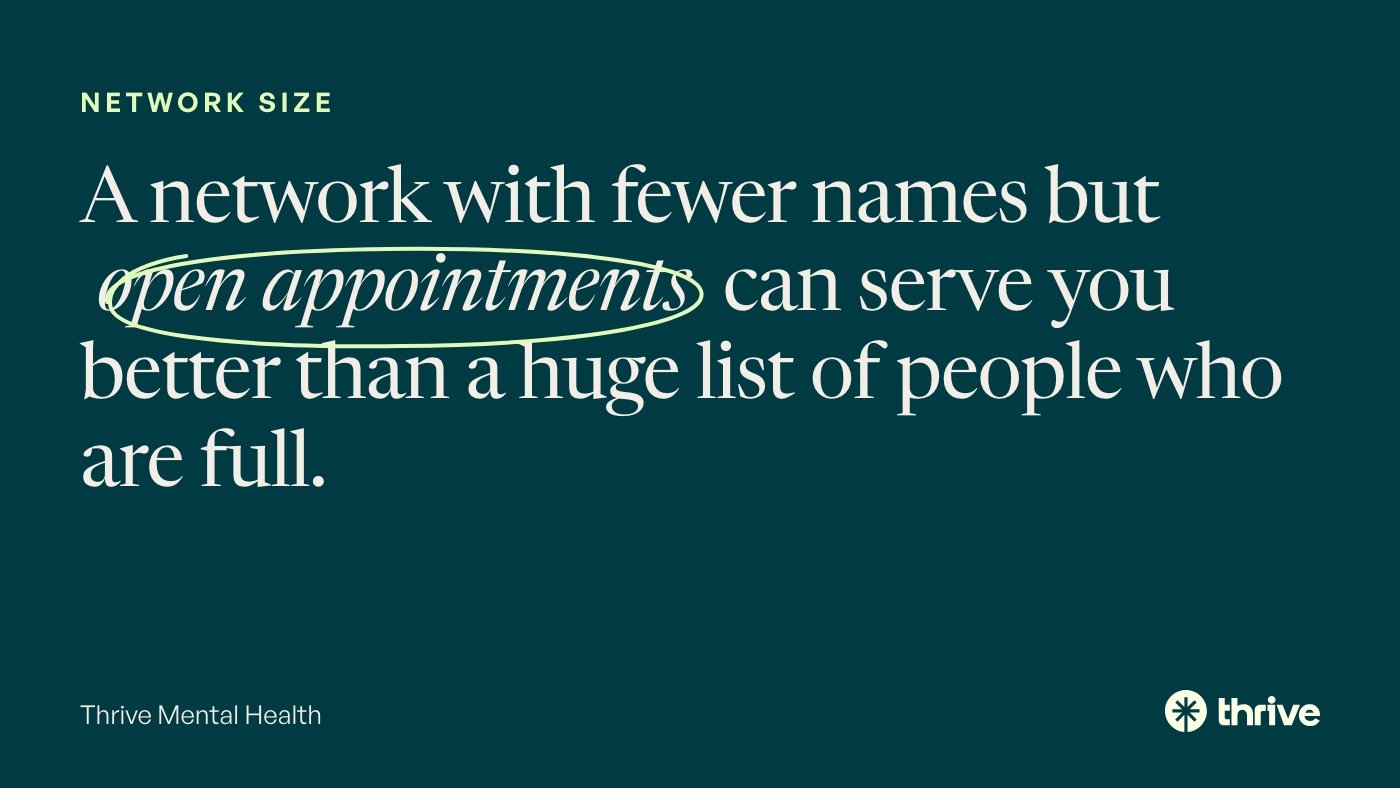
A bigger network sounds better, but the number of names in a directory can mislead you. What matters is whether the network includes therapists with open appointments and programs at the level of care you may need.
- Check availability, not just listings. Call two or three listed therapists and ask whether they take new clients.
- Check for virtual options. A virtual IOP licensed in your state can widen your choices, especially outside big cities.
- Check the behavioral health network by name. Some plans use a separate company for mental health, with its own directory.
How to compare total yearly cost, not just premium
The premium is what you pay each month to have coverage. For anyone who expects regular therapy or IOP, the out-of-pocket maximum often matters more than the premium.
 Your Schedule, Your Health: Finding Flexible Mental Health Support in St. PeteMental Health
The out-of-pocket maximum is the most you pay for covered, in-network care in a plan year. After you reach it, the plan pays 100% of covered in-network services. Use this simple check for each plan you are considering:
- Add up 12 months of premiums for the plan you are looking at.
- Add the deductible if you expect to use care beyond preventive visits.
- Estimate therapy costs from the copay or coinsurance per session.
- Compare against the out-of-pocket maximum, which caps your in-network spending.
A lower premium plan with a high out-of-pocket maximum can cost more in a year with heavy care. Our guide on reading mental health insurance benefits walks through each term.
What to check before you pick a 2027 plan
HealthCare.gov lists the open enrollment dates: enroll by December 15 for coverage that starts January 1. Enroll from December 16 to January 15 and coverage starts February 1. Use these weeks to check the plan before you commit.
- Read the Summary of Benefits and Coverage. HealthCare.gov explains this standard plan summary, which lists mental health costs.
- Search the directory for your therapist and for any program you are considering.
- Look up the mental health copay for outpatient visits and intensive outpatient care.
- Ask whether telehealth is covered the same way as in-person care.
- Confirm the plan type printed on the plan details, not just the brand name.
If you are already in treatment, keep in mind that switching plans can mean a new network, new costs and a new approval for care. Ask your current provider whether they are in network with the plan you are considering.
Common questions about HMO vs PPO vs EPO for mental health
Which plan type is best for therapy?
It depends on your situation and the providers you want to see. A PPO suits you if you want an out-of-network therapist. An HMO or EPO can cost less if your providers are in network.
Do HMOs cover therapy?
Yes. Marketplace plans cover mental health as an essential health benefit, including psychotherapy and counseling. You usually need an in-network provider, and some HMOs ask for a referral.
Does an EPO cover out-of-network therapists?
Generally no, except in emergencies or under specific federal protections. Check that your therapist is in the EPO’s network before you enroll.
Is IOP covered on all three plan types?
Many plans of all three types cover intensive outpatient care when it is medically necessary, usually with prior authorization. Check your plan’s summary for the exact cost.
When is the deadline to pick a 2027 plan?
On HealthCare.gov, open enrollment runs November 1, 2026 to January 15, 2027. Enroll by December 15 for coverage starting January 1.
Can I change plans midyear if my therapist leaves the network?
Usually not, unless you have a qualifying life event such as a move or losing other coverage. Ask your plan about continuity of care options if your provider leaves.
Next steps
Whichever plan type you choose, a benefits check shows what intensive outpatient care would cost you. Thrive Mental Health is a Joint Commission accredited provider of virtual IOP for adults. We serve Florida, Indiana, Arizona, California, North Carolina, South Carolina and Texas. See our list of insurance companies; networks vary by plan and state, so check your plan or ask us to verify.
Verify your coverage with Thrive: free, confidential benefits check. Most members receive a summary within 24 hours, and you can start as soon as you are ready. Prefer to talk first? Call (561) 203-6085 or contact us.

This article is for informational purposes only and is not a substitute for individualized clinical advice or insurance verification.