





Most Florida commercial plans require prior authorization before they pay for an intensive outpatient program (IOP), and the program usually submits the request for you. For job-based plans, federal rules give the plan up to 15 days to decide a standard request and no more than 72 hours for an urgent one. Approval usually covers a set number of days, so expect the plan to review your progress again before that block runs out.
This guide explains how the process works on Florida commercial plans, what reviewers look for, how long each step takes, and what to do if the answer is no.
This article is informational, not clinical or financial advice. Verify your benefits with your plan documents and, where needed, a licensed professional.
What is prior authorization for IOP?
Prior authorization is the plan’s advance decision that a service is medically necessary. HealthCare.gov’s glossary calls it preauthorization and notes other names: prior approval or precertification. It also warns that approval “isn’t a promise” the plan will cover the cost. Your deductible, coinsurance, and eligibility still apply.
Plans use it most for higher levels of care. IOP sits between weekly therapy and more intensive settings. An intensive outpatient program gives at least nine hours of structured care a week while you live at home and keep up with daily life. Because it costs more than weekly therapy, plans want to confirm the fit first.
Not every Florida plan requires it, and rules differ within the same carrier. Your Summary of Benefits and Coverage or member services can tell you whether IOP needs approval on your plan.
Who requests prior authorization, you or the program?
In most cases, the program does. The IOP team gathers your clinical information, sends it to the plan, and answers follow-up questions. Your part is smaller, but it still matters.
- Share your history. Past therapy, medications, hospital stays, and what has or hasn’t helped.
- Complete the intake assessment. The scores and notes from this visit often form the core of the request.
- Sign releases if asked. Records from your therapist or psychiatrist can strengthen the case.
- Keep your plan details handy. Member ID, group number, and the name of any behavioral health company that manages your benefits.
Many Florida plans hand mental health reviews to a separate behavioral health company. The phone number for it is often on the back of your card. Ask your program which company is reviewing your request.
What does Florida law say about prior authorization?
Florida standardizes the paperwork more than the timing. Under section 627.42392 of the Florida Statutes, insurers and HMOs without an electronic process must use a state-approved form. It can’t run longer than two pages, not counting instructions.
The form must capture the basics a reviewer needs:
- Your name, date of birth, and health plan ID number.
- The provider’s name, address, and phone number.
- The treatment requested and the medical reason for it.
- All services tried and failed.
- An attestation that the information is true and accurate.
That “tried and failed” line matters for IOP. Plans often want to see why a lower level of care, like weekly therapy, isn’t enough right now. Florida’s law applies to plans the state regulates. Self-funded employer plans follow federal rules instead.
What do reviewers look for in an IOP request?
Each plan uses written medical necessity criteria. The exact wording varies, but most IOP reviews come back to the same questions.
| Question the reviewer asks | What helps answer it |
|---|---|
| Are symptoms affecting daily life? | Specific effects on work, sleep, relationships, or self-care |
| Is weekly therapy not enough? | Dates and results of past outpatient care or medication changes |
| Is IOP safe and sufficient? | A safety assessment showing a higher level of care isn’t needed |
| Can the person take part? | Ability to attend sessions and engage, plus some support at home |
| Is there a clear plan? | Treatment goals and how progress will be measured |
You can ask for the criteria. Federal parity rules require plans to provide their medical necessity criteria for mental health benefits on request. Seeing the exact standard makes it easier to show how you meet it.
How long does prior authorization take in Florida?
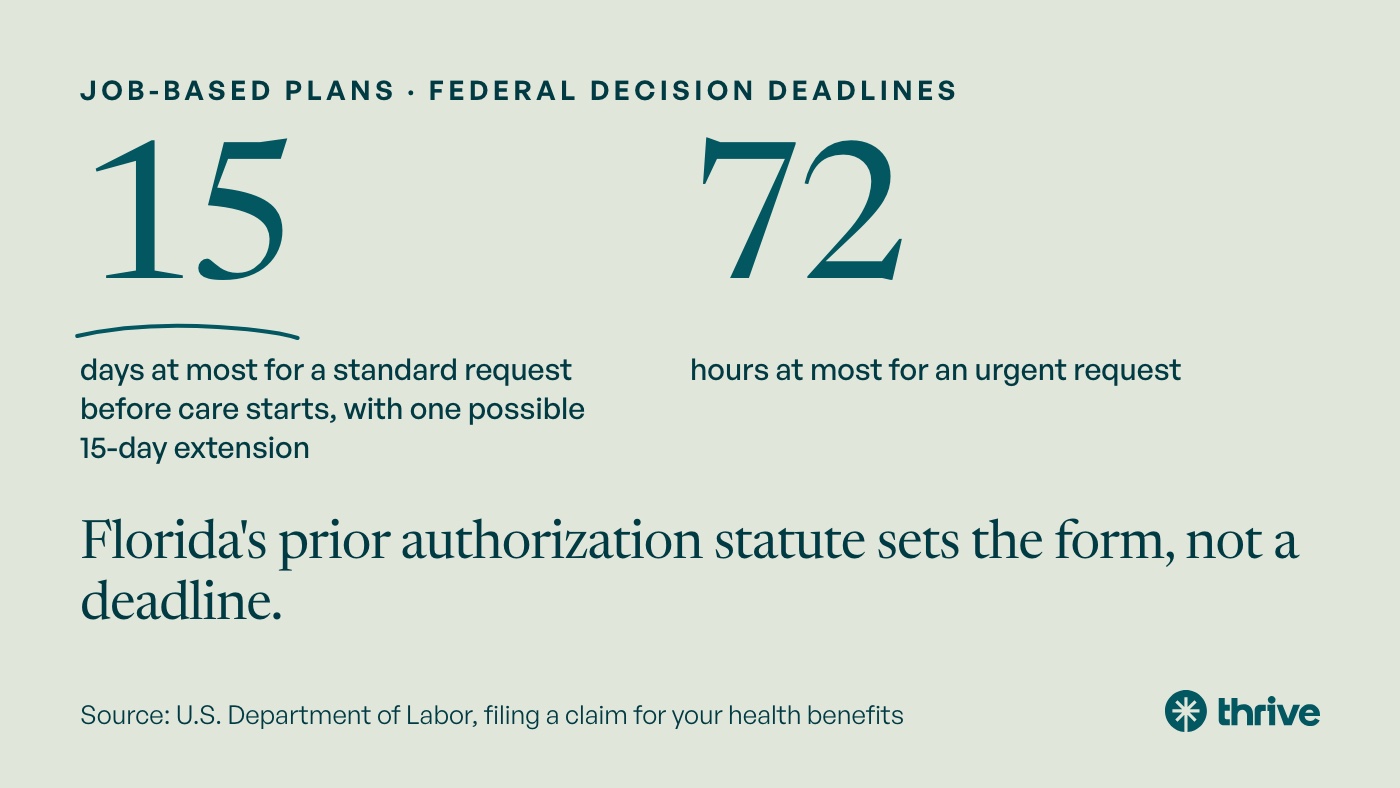
Florida’s prior authorization statute sets the form, not a deadline. For most job-based plans, the timing comes from the Labor Department’s guide to filing a claim for your health benefits.
| Type of request (job-based plans) | Federal decision deadline |
|---|---|
| Urgent request | No more than 72 hours |
| Standard request before care starts | No later than 15 days, with one possible 15-day extension |
| Urgent request to extend approved care | Within 24 hours, if made at least 24 hours before the approval ends |
| Individual or Marketplace plan | 15 days for prior authorization, 72 hours if urgent, per HealthCare.gov |
A request counts as urgent when waiting could seriously harm your health. For urgent claims, the Labor Department lets your treating clinician act for you without a signed form. Our insurance page explains how we handle this during admission.
What is concurrent review, and why does it matter?
Concurrent review is the plan’s check-in while you are in treatment. The first approval often covers a block of days. Before it ends, the program sends an update, and the plan decides whether to approve more.
Reviewers look for progress and a continued need. Updated symptom scores, attendance, and goals met so far all help. Federal rules also protect you here. If a job-based plan cuts short a course of treatment it already approved, that cut counts as a denial. Under the federal claims procedure rule, the plan must tell you early enough to appeal before care stops.
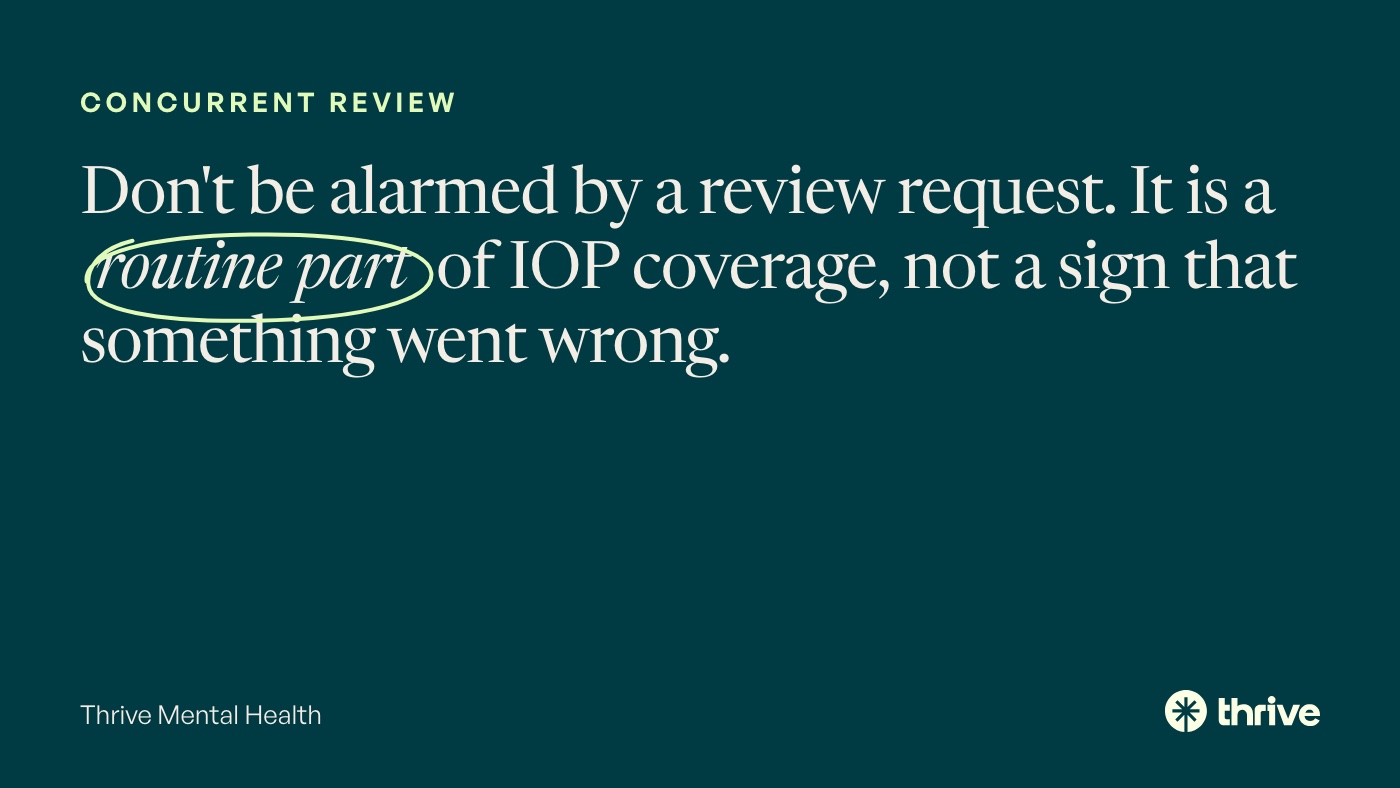
Don’t be alarmed by a review request. It is a routine part of IOP coverage, not a sign that something went wrong.
What happens if prior authorization is denied?
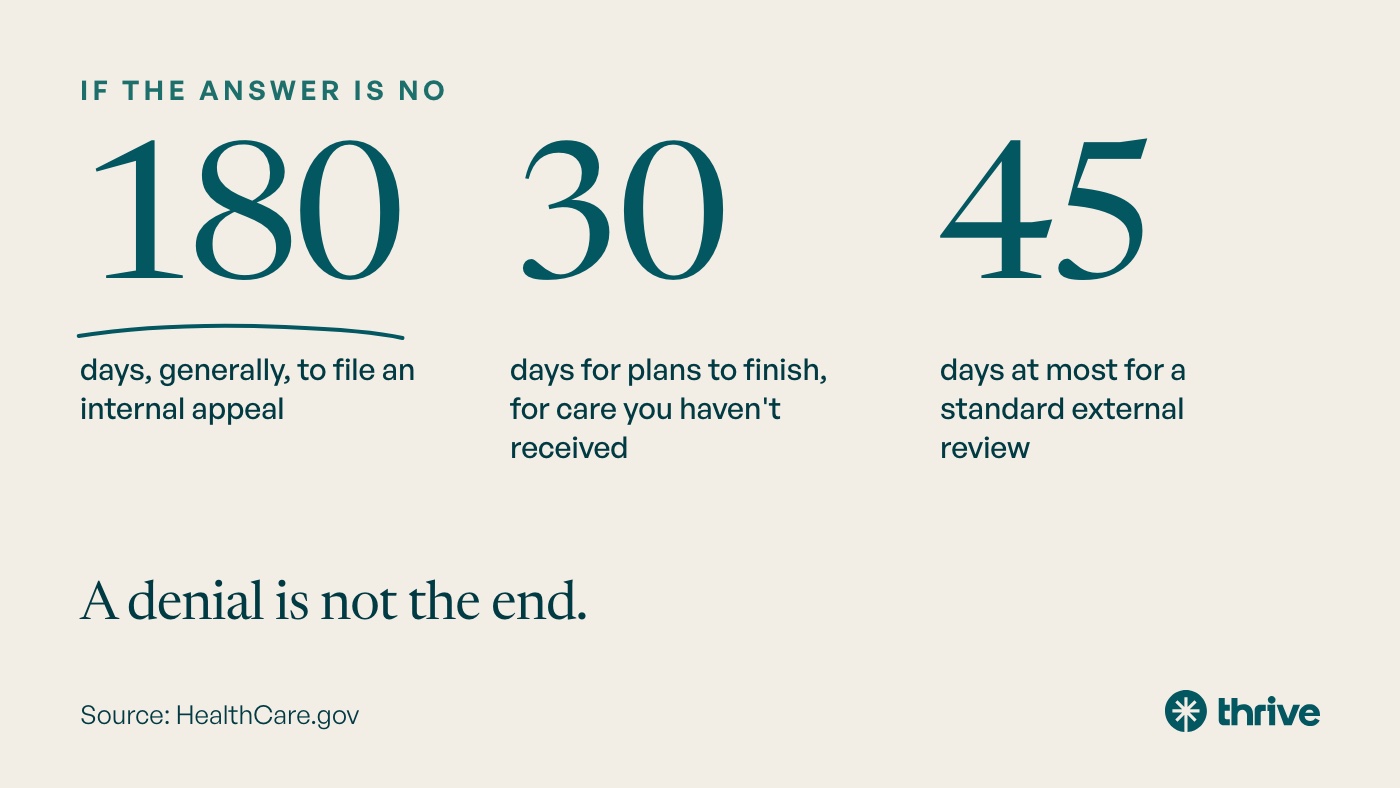
A denial is not the end. You have several ways to push back, and the fastest one often comes first.
 Discover Intensive Outpatient Programs Near YouIntensive Outpatient Program
- Peer-to-peer review. Many plans let the program’s clinician talk directly with the plan’s reviewer. These calls can resolve a denial quickly.
- Internal appeal. HealthCare.gov’s internal appeals guide says you generally have 180 days to file. Plans must finish within 30 days for care you haven’t received. Urgent appeals on job-based plans are decided within 72 hours.
- External review. If the plan still says no, an independent reviewer can decide. HealthCare.gov says standard external reviews take no more than 45 days and expedited ones no more than 72 hours. Check your plan’s denial letter for the deadline.
Parity can help, too. The federal Mental Health Parity and Addiction Equity Act bars plans from applying stricter prior authorization to mental health care than to comparable medical care. If IOP faces more frequent reviews than similar medical programs, point that out.
For insured Florida plans, the Florida Department of Financial Services Division of Consumer Services helps with insurance complaints at 1-877-693-5236. Self-funded employer plans go to the U.S. Department of Labor at 1-866-444-3272.
If you are in crisis or thinking about harming yourself, call or text 988, or go to the nearest emergency room.
How do Florida Blue, Aetna, UnitedHealthcare, and Cigna handle it?
Each carrier sets its own process, and it can differ from plan to plan. Rather than rely on a general rule, ask member services these questions:
- “Does my plan require prior authorization for intensive outpatient mental health care?”
- “Which company reviews behavioral health requests for my plan?”
- “How many days does a first approval usually cover, and when is the next review?”
- “Is virtual IOP covered the same way as in-person IOP?”
For more on specific Florida carriers, see our guides to Florida Blue and virtual IOP and Aetna virtual IOP in Florida.
Common questions about prior authorization for IOP in Florida
Do I have to get prior authorization myself?
Usually not. The IOP program typically submits the request and handles follow-up with the plan. Your intake information supports it.
How long does IOP prior authorization take in Florida?
For job-based plans, federal rules allow up to 15 days for a standard request and 72 hours for an urgent one.
Does approval mean my plan will pay?
Not always. Approval confirms medical necessity, but your deductible, coinsurance, and eligibility still apply.
Why does my plan keep reviewing my IOP care?
Plans often approve IOP in blocks of days. Concurrent review checks progress before approving more.
What if my plan denies prior authorization?
Ask about a peer-to-peer review, then file an internal appeal. If that fails, you can request an external review.
Does Florida law limit prior authorization paperwork?
Yes. For state-regulated plans without an electronic process, Florida requires a standard form of no more than two pages.
Next steps
Prior authorization should not be your job when you are trying to get well. Thrive Mental Health is a Joint Commission accredited provider of virtual intensive outpatient care for adults in Florida, Indiana, Arizona, California, North Carolina, South Carolina, and Texas. Many plans require prior authorization for IOP, and our team requests and tracks it for you as part of admission.
Verify your coverage with Thrive: free, confidential benefits check. Most members receive a summary within 24 hours, and you can start as soon as you are ready. Prefer to talk first? Call (561) 203-6085.

This article is for informational purposes only and is not a substitute for individualized clinical advice or insurance verification.