





The most useful coping skills activities for adults are ones clients can practice in session and then repeat alone, on a bad Tuesday, without a worksheet. Below are 25 activities in five categories (grounding, body-based, cognitive, social, and creative), each with how to teach it in session and a homework version. They are written for clinicians who run adult groups or individual sessions, and each one works on video.
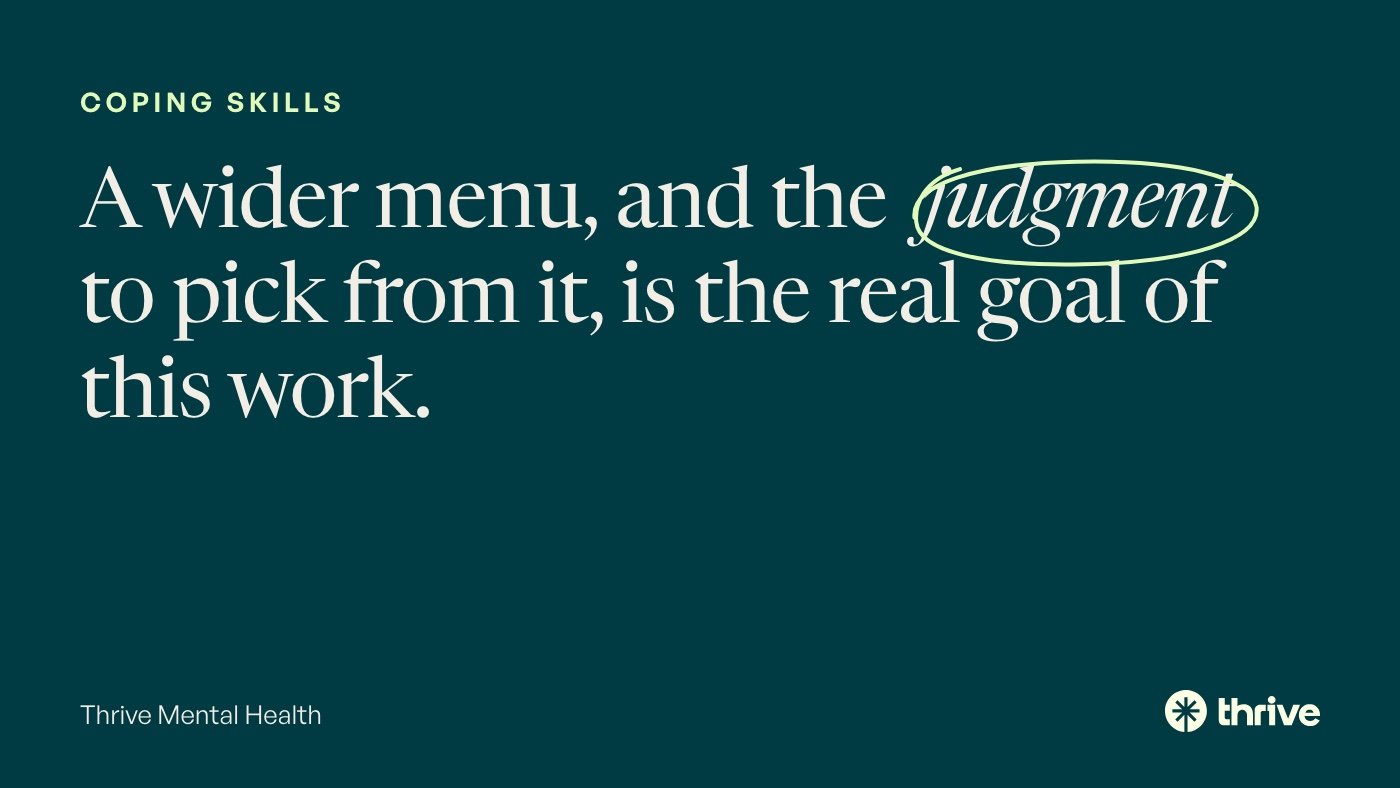
Clients rarely lack coping skills entirely; more often they lean on a few strategies that stopped paying off, or they use one strategy for every problem. A meta-analysis of coping flexibility covering nearly 59,000 people found that adults who match their strategy to the situation adjust better to stressful life changes. A wider menu, and the judgment to pick from it, is the real goal of this work.
What separates adaptive from maladaptive coping?
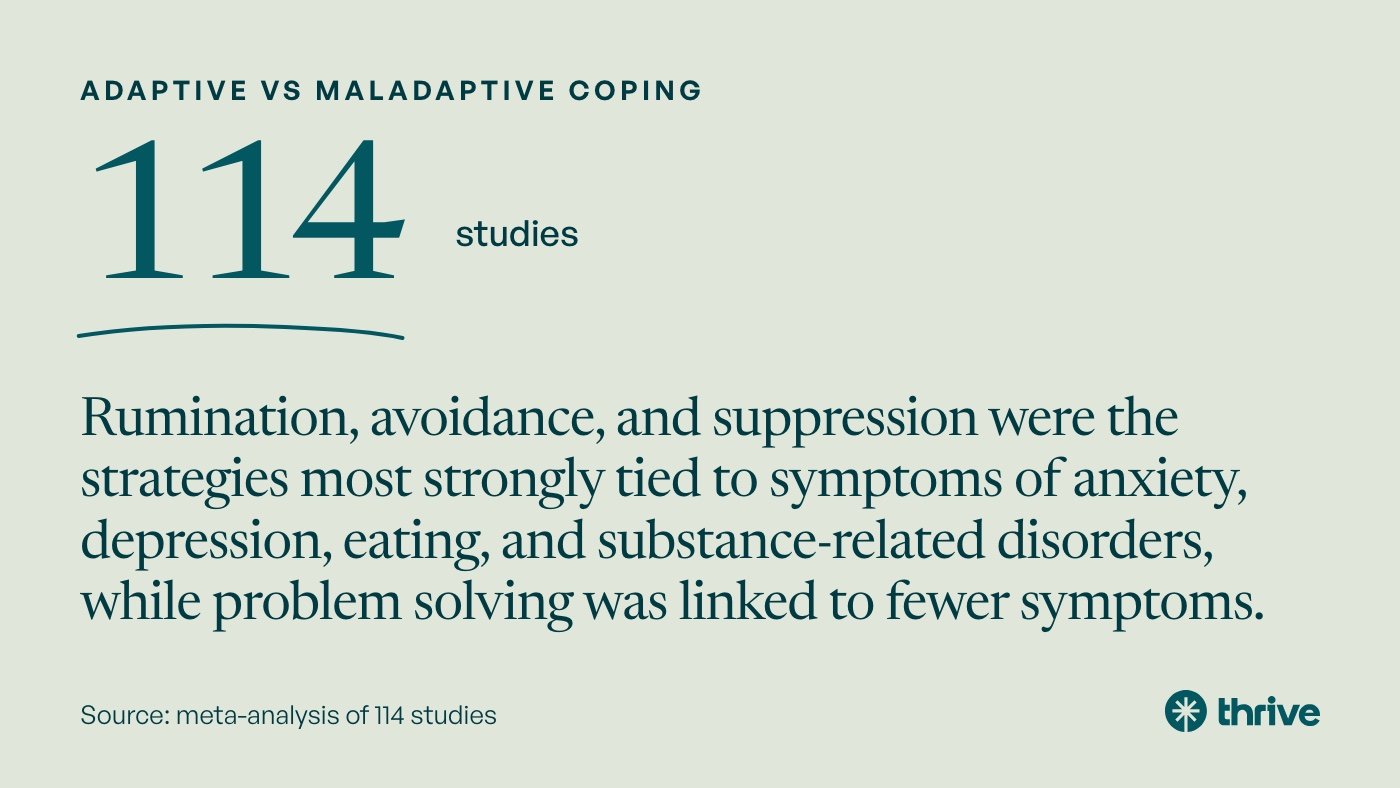
Start by showing clients the difference without judgment, because most maladaptive habits began as reasonable solutions. A meta-analysis of 114 studies found rumination, avoidance, and suppression were the strategies most strongly tied to symptoms of anxiety, depression, eating, and substance-related disorders, while problem solving was linked to fewer symptoms. Our clinician-written guide to coping strategies makes a good client handout for this step.
| Coping move | How it feels now | What it tends to cost later | A healthier swap from this list |
|---|---|---|---|
| Avoiding the problem | Relief | The problem grows and confidence shrinks | Problem-solving steps (11) |
| Replaying it over and over | Feels like working on it | More low mood, less sleep | Control circle (12) |
| Pushing feelings down | Control | Feelings leak out sideways | Coping function audit (14) |
| Drinking or using to numb | Fast calm | Dependence and new problems | Coping menu (25) and support map (16) |
| Isolating | Less effort | Loneliness deepens | Scripted ask (17) |
Grounding activities for when clients drift or spiral
1. The categories game. In session, name a category (dog breeds, cities A to Z) and have members take turns until the list runs out, which demands just enough focus to interrupt a spiral. Homework: pick three categories to use on the commute or in bed.
2. Orienting to the room. Members slowly turn their head and name three neutral things they see, plus where the door is, which tells the nervous system that the room has been checked. Homework: orient once on arrival at every new place for a week.
3. Anchor object. Each member picks a small textured object, such as a smooth stone or key ring, and describes how it feels. Homework: carry it in a pocket and hold it at the first sign of stress.
4. Feet and seat. Members spend thirty seconds pressing their feet into the floor and noticing where the chair holds the body. Nobody else can see it happening, which clients value at work. Homework: pair it with a daily cue, such as every red light.
5. Here-and-now statement. Members say, “My name is ___, today is ___, I am in ___, and I am safe right now,” which helps clients who drift away from the present. Homework: write the statement on a card for a wallet or phone case.
Body-based activities that settle the nervous system
6. Butterfly hug. With arms crossed over the chest, members tap their shoulders slowly and alternately for one minute. See our guide to bilateral stimulation techniques for variations. Homework: one minute before bed each night.
7. Desk stretch trio. Teach three stretches for neck, shoulders, and upper back, done seated, since many adults carry stress in posture they never notice. Homework: repeat the trio after every 90 minutes of screen time.
8. The ten-minute walk prescription. Plan three short walks for the week, with a day, time, and route for each. An umbrella review of 97 reviews found physical activity had medium effects on depression, anxiety, and distress. Homework: take the walks and rate mood before and after.
9. Wind-down design. Members sketch a 30-minute routine before bed with screens off, lights low, and one calming activity, because sleep loss makes every other skill harder to use. Homework: try it on four nights and log sleep quality.
10. Hand on heart. Members place a hand on the chest, breathe slowly, and say one kind sentence to themselves; expect awkwardness the first time, and name it out loud. Homework: use it once a day after a hard moment.
Cognitive activities that change the problem or the view of it
11. Problem-solving steps. Walk a volunteer’s real problem through five steps: define it, brainstorm, choose, act, and review. A meta-analysis of 30 trials found problem-solving therapy is probably effective for adult depression, with effects comparable to other therapies. Homework: run one problem through the steps.
12. Control circle. Draw three rings for what I control, what I can influence, and what I can’t touch, then have members sort current worries into the rings. Homework: pick one worry from the inner ring and act on it.
13. Worst, best, most likely. For one feared outcome, members write the worst case, the best case, and the most likely case, which most people have never written down. Homework: repeat it for the next worry that keeps them up.
14. Coping function audit. Members list their five most-used coping habits and mark each one as approach or avoid, and helpful now or later. Homework: swap one avoid habit for an approach habit this week.
15. Fit check. Teach a simple rule: act on stressors you can change, and soothe or accept the ones you can’t. Practice by sorting sample stressors aloud as a group. Homework: log three stressors and the strategy that fit each.
Social activities that make reaching out easier
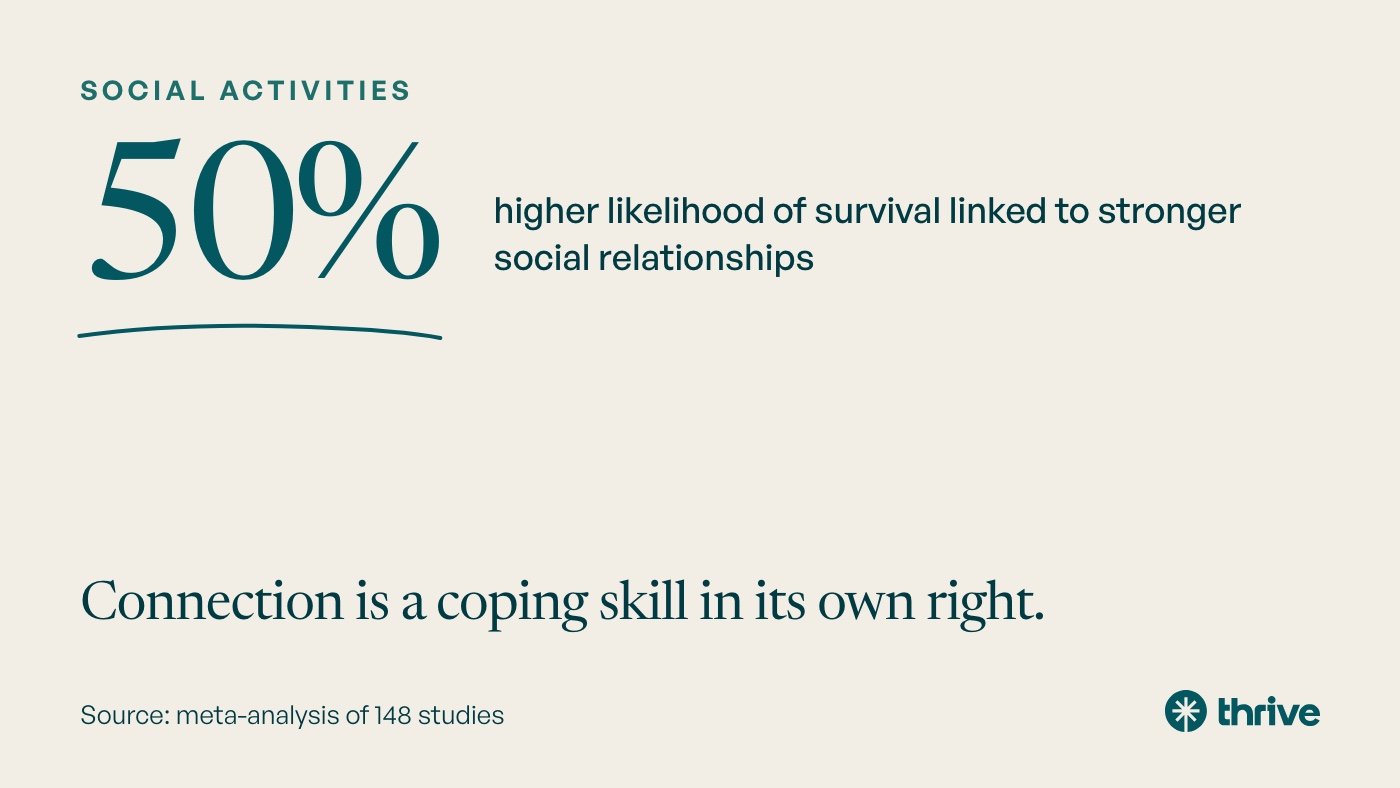
Connection is a coping skill in its own right. A meta-analysis of 148 studies linked stronger social relationships to a 50% higher likelihood of survival.
16. Support map. Members draw three circles and place people by what they offer (practical help, emotional support, or fun), and the gaps become obvious fast. Homework: contact one person on the map.
17. The scripted ask. Members write the text they would send on a hard day, such as “Rough day. Could you talk for ten minutes tonight?” Writing it while calm removes the hardest part of reaching out. Homework: send it once, even on an average day.
18. Shared plans. Schedule one enjoyable activity with another person, drawing on behavioral activation, which a meta-analysis of 26 trials found effective for depression. Homework: keep the plan and note mood afterward.
19. One small kindness. Members plan one small act for someone else, such as a note, a favor, or a check-in, which shifts attention outward for a moment. Homework: do it and report back.
 Choosing the Right Neurologist for Autism Diagnosis: A Comprehensive GuideCoping Strategies
20. Midweek buddy check. In groups, pair members for one short text exchange between sessions, and set limits in advance: no crisis support, just connection. Homework: one check-in each way.
Creative activities for clients who resist talking
21. Steady things photo walk. Members take five photos of things that feel steady or calming, then share one in the next session. Homework: save the photos in a phone album to open on hard days.
22. Pattern drawing. Members spend five minutes drawing simple repeating patterns in a small square; no skill is needed, and the repetition slows the mind. Our list of art therapy activities for adults has more. Homework: one square a day.
23. Six-word day. Members sum up their day in exactly six words, a constraint that makes feelings easier to name. Homework: write one six-word day each evening.
24. The mastery recipe. Members choose a simple recipe they can finish in 20 minutes, because completing it gives a small, reliable sense of competence. Homework: cook it once and notice mood before and after.
25. The coping menu. As a capstone, members sort their favorite skills from this list by time needed: one minute, ten minutes, or an hour. Homework: keep the menu on the fridge or phone and use one item daily.
How do you make coping skills stick between sessions?
Homework is where skills become habits. An updated meta-analysis of 23 studies found homework completion was linked to better therapy outcomes, a small to medium effect that held across symptom types.
- Practice when calm first. A skill first tried in a crisis rarely works, so rehearse it in session until it feels boring.
- Shrink the homework. One skill, once a day, beats five skills attempted once.
- Review it every session. Homework that never gets reviewed tells clients it did not matter.
- Adapt for video. Ask members to keep their anchor object and coping menu within reach of the camera, and use the chat for quick ratings.
For skills-based group formats, see our DBT group activities for adults and mindfulness group activities.
Common questions about coping skills activities for adults
How many coping skills should a client learn at once?
One or two a week, because depth beats breadth and a skill practiced daily for two weeks is worth more than ten skills read once.
What if a client says grounding doesn’t work?
Ask when they tried it, since most people first try at peak distress. Rehearse it at a low level of distress, then build up.
Are distraction skills maladaptive?
Not necessarily, since short-term distraction can be healthy when a problem can’t be solved right now. It becomes a problem when it replaces facing things that could change.
Do these activities work in virtual sessions?
Yes, because nearly all of them use household objects or no materials at all. Keep materials within camera view and use the chat for quick ratings.
When are coping skills not enough?
When symptoms keep rising despite consistent practice or daily functioning is slipping, that is a signal to consider a higher level of care.
For clinicians: when a client needs more than weekly skills practice
Some clients practice faithfully and still lose ground between sessions. An intensive outpatient program adds nine or more hours of structured care each week, with room to rehearse skills daily.
Thrive Mental Health runs adult-only virtual IOP across Florida, Indiana, Arizona, California, North Carolina, South Carolina, and Texas. We are accredited by The Joint Commission for Behavioral Health Care and Human Services, and we specialize in adults. Refer a patient here, or reach our clinical team at (561) 203-6085. Referred patients are typically assessed within days, and we coordinate care back to you at discharge.

This article is for informational purposes only and is not a substitute for individualized clinical advice or insurance verification.