





988 Disclaimer: If you’re in crisis, call or text 988 right now. You are not alone.
If you’re in crisis, call or text 988 right now. You are not alone.
Find mental health professionals in Florida who treat trauma-related memory loss
Why Trauma Destroys Your Memory, And How to Get It Back Fast
Find mental health professionals in Florida who treat trauma-related memory loss and you’ll find a specialized field focused on healing one of trauma’s most devastating effects: the loss of your own story.
Quick Answer: Where to Find Florida Trauma Therapists for Memory Loss
- Thrive Mental Health, Virtual IOP with EMDR, CBT, and Somatic therapies, see IOP Programs
- EMDRIA Directory, Search for certified EMDR therapists in Florida
- Psychology Today, Filter by trauma, dissociative disorders, and PTSD specializations
- Insurance Directories, Cigna, Optum, BlueCross BlueShield provider search tools
- Verify Your Insurance with Thrive, Check coverage (Cigna, Optum, BlueCross BlueShield, Florida Blue) in 2 minutes, Start benefits check
Key Credentials to Look For:
- EMDR certification or Somatic Experiencing training
- Licensed Professional Counselor (LPC) or Licensed Clinical Social Worker (LCSW)
- Specialization in dissociative disorders, PTSD, or trauma-informed care
Trauma doesn’t just hurt. It erases.
When your brain experiences overwhelming stress, it protects you by blocking memories, sometimes for hours, sometimes for years. This is dissociative amnesia, a survival mechanism that becomes a prison. You lose time. You forget key events. You feel detached from your own life.
Post-traumatic stress disorder (PTSD) affects memory through three pathways: intrusive flashbacks that won’t stop, avoidance that keeps you from processing what happened, and cognitive symptoms that make it hard to remember even basic details of the traumatic event. One in five Americans has a mental health condition, and many don’t realize their memory problems are trauma-related.
The good news? Specialized therapies like EMDR, trauma-focused CBT, and Somatic Experiencing can restore what trauma took. And in Florida, you have access to world-class trauma therapists who understand how to heal memory loss at its root.
I’m Nate Raine, CEO of Thrive Mental Health, and I’ve spent over a decade building systems that help people find mental health professionals in Florida who treat trauma-related memory loss through evidence-based, integrated care. At Thrive, we combine virtual IOP with trauma-specific therapies to deliver faster, more complete recovery for individuals across Florida, Arizona, California, Indiana, and South Carolina.
This guide breaks down the top trauma therapists in Florida, what to look for, and how to start healing, without wasting time on providers who can’t deliver results.
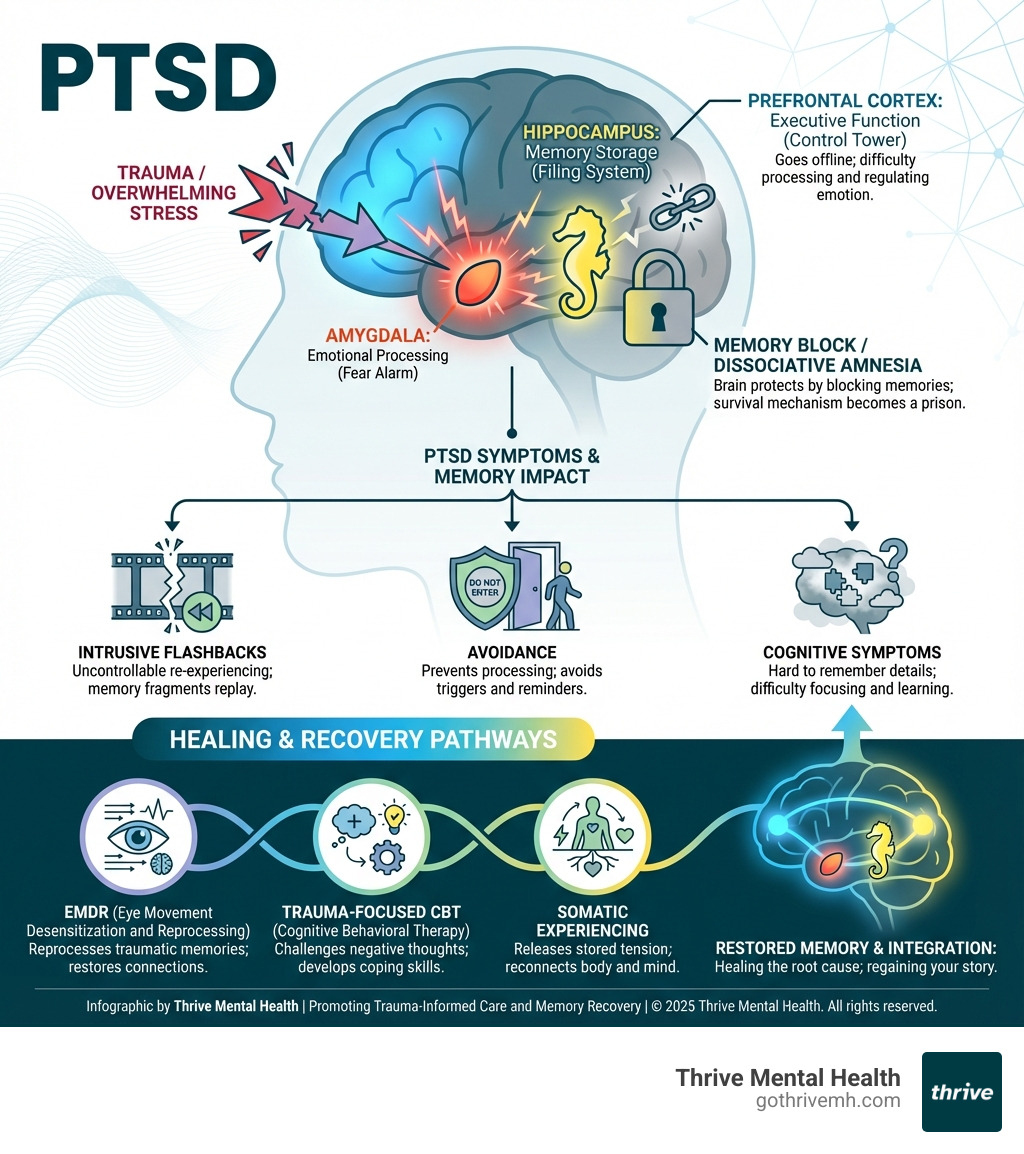
Infographic: How Trauma Impacts Memory, Visual breakdown of the brain’s trauma response showing the hippocampus (memory storage), amygdala (emotional processing), and prefrontal cortex (executive function); includes flowchart of PTSD symptoms leading to dissociative amnesia, memory gaps, flashbacks, and cognitive difficulties; highlights treatment pathways including EMDR, CBT, and Somatic therapies; statistics showing trauma-related memory loss prevalence and recovery timelines
Find mental health professionals in Florida who treat trauma-related memory loss. terms to learn:
- I’m worried about the link between trauma and schizophrenia. Where can I find an assessment program in Fresno?
- Why Betrayal Trauma Feels Like PTSD (And What You Can Do About It)
- bilateral stimulation exercises for trauma
What Is Trauma-Related Memory Loss? (And Why It’s Not Your Fault)
Trauma-related memory loss isn’t a sign of weakness; it’s a powerful, often subconscious, survival mechanism. When we experience an event that overwhelms our capacity to cope, our brain initiates a protective shutdown. This can manifest as dissociative amnesia, a condition where we forget significant personal information, often related to the traumatic event itself. It can range from forgetting specific details to entire periods of our lives.
This memory loss is deeply intertwined with conditions like Post-Traumatic Stress Disorder (PTSD) and other dissociative disorders. Dissociative disorders are characterized by problems with memory, identity, emotion, perception, and sense of self. People with these symptoms may feel detached from their bodies, experience memory gaps, or even feel like the world around them isn’t real. These are not character flaws but complex neurological responses to severe stress, often rooted in early childhood trauma. When the brain can’t process an overwhelming experience, it walls it off, leading to cognitive symptoms like memory difficulties and a negative outlook. It’s your brain trying to keep you safe, even if it creates new problems in the process.
7 Warning Signs Your Memory Gaps Are Trauma-Linked
It’s common to occasionally forget where you left your keys, but trauma-related memory loss goes deeper. It impacts your sense of self and your ability to steer daily life. Here are critical signs that your memory gaps might be linked to past trauma:
- Feeling Detached or Emotionally Numb: You might feel disconnected from your body, emotions, or surroundings, a phenomenon known as depersonalization or derealization. This emotional numbing can extend to a general lack of feeling or interest.
- Significant Memory Gaps for Specific Events: You might have large blanks in your memory concerning traumatic events or even periods of your life, sometimes hours, days, or longer, without a clear explanation. This isn’t just forgetting; it’s an inability to recall information that should be accessible.
- Trouble Recalling Personal History or Life Events: Beyond the trauma itself, you might struggle to remember important milestones, personal details, or even conversations, leading to confusion about your own story and identity.
- Flashbacks, Nightmares, or Overwhelming Anxiety: Instead of cohesive memories, you might experience intrusive thoughts, vivid flashbacks, or recurring nightmares that force you to re-experience parts of the trauma without context or control. These can be accompanied by intense anxiety or panic.
- Difficulty Connecting with Others: Trauma can make it hard to form secure attachments. You might find yourself struggling with relationships due to emotional disconnection, irritability, or sudden mood swings.
- Struggling to Relax or Feel Safe: A constant state of hypervigilance, an inability to relax, or a persistent feeling of being unsafe, even in secure environments, can indicate unresolved trauma impacting your nervous system.
- Avoidance of Certain People or Situations: You might find yourself avoiding places, activities, or conversations that unconsciously remind you of the trauma, leading to social isolation or a restricted life.
If you’re experiencing these symptoms, it’s a clear indication that something deeper needs attention. These are not signs of personal failure, but rather your brain’s call for help in processing overwhelming experiences.
Understanding PTSD Symptoms, Causes, and Treatment
5 Ways Thrive Mental Health Restores Lost Memories in Florida
At Thrive Mental Health, we understand that healing trauma-related memory loss requires a multi-faceted, compassionate approach. We don’t just treat symptoms; we help you gently reconnect with yourself and reclaim your narrative. Our virtual Intensive Outpatient (IOP) programs in Florida are designed to provide comprehensive, evidence-based care. Here’s how we help you get your memories back and rebuild your life:

A compassionate therapist engages with a client in a serene, modern therapy setting, representing the healing process for trauma-related memory loss at Thrive Mental Health in Florida. The image conveys warmth, connection, and professional support.
EMDR at Thrive: Heal Without Reliving the Pain
Eye Movement Desensitization and Reprocessing (EMDR) is a powerhouse therapy specifically designed to help your brain reprocess distressing memories. It’s not about forgetting; it’s about reducing the emotional charge associated with them, allowing them to be stored in a less disturbing way.
How it works: During EMDR, a therapist guides you through bilateral stimulation (often eye movements, but can also be taps or tones) while you briefly focus on the traumatic memory. This process helps your brain integrate the memory, reducing its power over your present. Many clients report significant relief from flashbacks, nightmares, and the intense emotional distress linked to their past. EMDR targets the way memories are stored, making it incredibly effective for trauma-related memory loss and the lingering impact of past experiences.
How EMDR Therapy Reduces PTSD Symptoms
CBT & Trauma-Focused CBT: Rewire Your Brain, Reclaim Your Life
Cognitive Behavioral Therapy (CBT) and its specialized form, Trauma-Focused CBT (TF-CBT), are cornerstones of trauma recovery. These therapies help you identify and challenge the negative thought patterns and beliefs that trauma often creates. When trauma impacts memory, it can lead to distorted views of yourself, others, and the world.
Through CBT, we work together to:
- Identify unhelpful thoughts and beliefs stemming from trauma.
- Develop healthier coping mechanisms for anxiety, depression, and other trauma symptoms.
- Process traumatic memories in a structured and safe environment.
- Build resilience and skills to manage triggers effectively.
This approach helps to reorganize your cognitive landscape, allowing for a more accurate and less distressing understanding of your past, and paving the way for a more empowered future.
How CBT Can Transform Your Life
Somatic & Experiential Therapies: Release Trauma Trapped in Your Body
Trauma isn’t just in your head; it’s often trapped in your body. Somatic Experiencing and other body-based therapies recognize that our nervous system holds onto the residue of overwhelming events. This can manifest as chronic pain, tension, digestive issues, or a constant state of “fight or flight.”
In these therapies, we focus on helping you become aware of physical sensations and gently release the stored trauma. This might involve:
- Mindfulness and breathwork to regulate the nervous system.
- Safe movement and body awareness exercises.
- “Titration” or slowly processing small amounts of traumatic material to avoid re-traumatization.
By releasing the physiological tension, we can alleviate many of the physical and emotional symptoms of trauma, including the cognitive difficulties and detachment associated with memory loss. This holistic approach ensures that healing happens on all levels.
Group and Experiential Therapy at Thrive
You don’t have to heal alone. Our group and experiential therapy sessions provide a powerful space for shared healing and connection. Here, you’ll find peer support from others who understand what you’re going through, reducing feelings of isolation and shame.
Experiential therapies, which can include art therapy, psychodrama, or expressive arts, go beyond traditional talk therapy. They allow you to process trauma and memory loss through creative expression and action, engaging parts of your brain that words alone might not reach. This can be particularly helpful when verbalizing memories is difficult. These sessions foster skill-building, increase self-awareness, and offer a safe environment to practice new ways of relating to yourself and others.
Virtual IOP: Faster, Flexible Recovery
We believe that high-quality, evidence-based trauma treatment should be accessible, no matter your schedule or location. That’s why Thrive Mental Health offers comprehensive virtual Intensive Outpatient (IOP) programs.
Our programs combine clinical expertise, flexible scheduling, and measurable results. Designed for people who need more than once-a-week therapy but less than inpatient care, our virtual and hybrid options allow you to engage in intensive healing while maintaining your daily responsibilities. We offer evening and weekend options to fit busy lives.
Whether you’re in Florida, or in our other locations in Arizona, California, Indiana, and South Carolina, you can access our expert-led programs. We work with major insurance providers like Cigna, Optum, BlueCross BlueShield, and Florida Blue to make treatment affordable and accessible. Verify coverage in 2 minutes: Start benefits check.
 The Hidden Scars: Recognizing Post-Traumatic Stress DisorderMental Health
Online Counseling for Trauma
Virtual IOP & PHP Programs
How to Find the Right Trauma Therapist in Florida, And Avoid Wasting Time
Searching for the right trauma therapist in Florida, especially one equipped to handle memory loss, can feel overwhelming. With so many options, how do you ensure you’re choosing someone who will actually help you reclaim your life? Here’s a streamlined approach to finding effective, integrated care.

A person uses a laptop to search for “Florida trauma therapist,” symbolizing the journey to find specialized mental health care.
Step 1: Search for Trauma Specialists at Thrive
Start your search by looking for providers who explicitly specialize in trauma, PTSD, and dissociative disorders. These are the professionals most likely to have experience with trauma-related memory loss.
When you’re looking for professionals, especially at Thrive, here’s how to narrow your focus:
- Filter by Insurance: We work with major insurance providers like Cigna, Optum, BlueCross BlueShield, and Florida Blue. Check our website or call us to verify your benefits quickly. This saves you time and ensures affordability.
- Verify Credentials: Look for licensed professionals such as Licensed Professional Counselors (LPC) or Licensed Clinical Social Workers (LCSW) with specialized training. Trauma-informed care is a must, and certifications in EMDR or Somatic Experiencing are strong indicators of expertise in memory-related trauma.
Questions to ask before booking:
- Are you trained in trauma-specific therapies like EMDR or Somatic Experiencing?
- Do you accept my insurance (e.g., Cigna, Optum, BlueCross BlueShield, Florida Blue)?
- What’s your experience with trauma-related memory loss and dissociation?
Step 2: Choose Integrated, Evidence-Based Care at Thrive
Many people waste time trying different therapists who offer only one modality or a general approach. When dealing with complex issues like trauma-related memory loss, an integrated approach is key.
At Thrive, we offer:
- Multiple Trauma Therapies Under One Roof: Our programs integrate EMDR, CBT, Somatic Experiencing, and other evidence-based modalities. This means your treatment plan is customized to your unique needs, allowing us to switch or blend approaches as necessary without you needing to seek multiple providers.
- Group Therapy and Experiential Options: Healing happens in community. Our group sessions offer invaluable peer support, and experiential therapies can help you process trauma in ways that traditional talk therapy might not.
- Integrated Care = Faster, Deeper Results: Our comprehensive approach addresses the mind, body, and nervous system, leading to more profound and lasting healing.
Step 3: Consider Thrive’s Virtual IOP for Flexible, Accelerated Recovery
We understand that life in Florida is busy. Our virtual IOP programs are designed for maximum flexibility and accelerated recovery.
- Access Expert Care Anywhere: Whether you’re in Florida, or in our other locations in Arizona, California, Indiana, or South Carolina, our virtual programs bring specialized trauma treatment directly to you.
- Insurance Coverage: Our programs are covered by major insurance plans, making intensive care accessible.
- Evening and Weekend Options: We offer flexible scheduling so you don’t have to choose between your healing and your responsibilities.
Verify your insurance with us today to see how affordable expert trauma care can be.
What to Demand in a Florida Trauma Therapist: The Non-Negotiable Checklist
When you’re ready to find mental health professionals in Florida who treat trauma-related memory loss, you need to be an informed consumer. Not all therapists are equally equipped to handle the complexities of trauma and its impact on memory. Here’s what your non-negotiable checklist should include:
A clipboard with a checklist highlights essential qualifications for a trauma therapist, including credentials, trauma specialization, and experience with memory loss, set against a clean, professional background.
Credentials That Actually Matter
Don’t settle for general talk therapy when specialized trauma care is what you need.
- Trauma-Informed Care: This is foundational. A trauma-informed therapist understands how trauma impacts every aspect of a person’s life, including memory, and prioritizes safety and empowerment.
- EMDR Certification: Eye Movement Desensitization and Reprocessing (EMDR) is specifically designed to reprocess traumatic memories. Look for therapists who are EMDRIA Certified.
- Somatic Experiencing Training: Since trauma lives in the body, training in Somatic Experiencing or other body-based therapies (like Sensorimotor Psychotherapy) is crucial for releasing physical tension and regulating the nervous system.
- Licensed Professional Counselor (LPC) or Licensed Clinical Social Worker (LCSW): These licenses ensure a professional has met rigorous educational and supervised experience requirements.
- Experience with Dissociative Disorders and PTSD: Therapists with specific experience in these areas will have a deeper understanding of how trauma manifests as memory loss and dissociation.
How to Prepare for Your First Appointment (and Get Results)
Your first appointment is more than just an introduction; it’s an opportunity to lay the groundwork for effective healing.
- Set Clear Goals: What do you hope to achieve? Do you want to reduce flashbacks, regain lost memories, or simply feel more present? Having a clear idea helps your therapist tailor the treatment.
- Write Down Questions: Don’t hesitate to bring a list of questions about their approach, experience, and what you can expect.
- Discuss Symptoms Honestly: Be open about your memory gaps, feelings of detachment, and any other symptoms you’re experiencing. The more information your therapist has, the better they can help.
- Understand the Therapy Process: Ask about the typical duration, frequency, and methods used. A good therapist will explain this clearly.
- Build Trust: The therapeutic relationship is paramount. Pay attention to how you feel during the session. Do you feel heard, respected, and safe? Trust is the foundation for profound healing.
Comprehensive Guide to Finding the Best Mental Health Therapist
FAQs: Trauma Therapy in FloridaWhat People Ask (and Need to Know)
Can I heal from trauma if I cant remember it?
Yes, absolutely. Many trauma therapies, including EMDR and Somatic Experiencing, don’t require you to explicitly remember or recount every detail of your trauma to heal. These approaches focus on processing the emotional and physiological impact of the trauma and building resilience, even if specific memories remain inaccessible. The goal is to alleviate your current symptoms and improve your overall well-being.
How much does trauma therapy cost in Florida?
The average cost of in-person therapy in Florida ranges from $100 to $200 per hour. However, many mental health professionals, including Thrive Mental Health, work with insurance providers like Cigna, Optum, BlueCross BlueShield, and Florida Blue, which can significantly reduce your out-of-pocket costs. Thrive also offers virtual programs and can discuss payment options, including sliding scale, to make care accessible.
Whats the difference between talk therapy and trauma-specific therapy?
Traditional talk therapy (like general counseling) often focuses on discussing thoughts, feelings, and current problems. While beneficial for many issues, trauma-specific therapies (such as EMDR, TF-CBT, and Somatic Experiencing) use specialized techniques that engage both the mind and body to directly target and reprocess traumatic memories and their physiological effects. This often leads to faster and deeper healing for trauma-related symptoms, including memory loss.
Does Thrive offer virtual trauma therapy in Florida?
Yes! Thrive Mental Health provides virtual Intensive Outpatient (IOP) programs across Florida, as well as in Arizona, California, Indiana, and South Carolina. Our virtual options allow you to receive expert trauma care from the comfort of your home, with flexible scheduling including evening options. Verify your insurance to learn more.
How do I know if a therapist is right for me?
The right therapist will have specific training and experience in trauma-informed care and modalities like EMDR or Somatic Experiencing. Beyond credentials, it’s crucial to feel a sense of safety, trust, and connection. Pay attention to your intuition during initial consultations. Do you feel heard and understood? Do they make you feel comfortable discussing sensitive topics? A good fit is essential for effective healing.
Summary: Find Mental Health Professionals in Florida Who Treat Trauma-Related Memory LossAnd Start Healing Now
Don’t let trauma-related memory loss steal another day. The right Florida trauma therapist can help you reclaim your life, faster, with less pain. Use insurance, demand real credentials, and consider Thrive’s virtual IOP for flexible, expert care.
Ready for support? Thrive offers virtual IOP programs with evening options. Verify your insurance in 2 minutes (no obligation) Start benefits check or call 561-203-6085. If you’re in crisis, call/text 988.

This article is for informational purposes only and is not a substitute for individualized clinical advice or insurance verification.