



UMR and Aetna are not really rivals in the way two insurance brands usually are. UMR is a third party administrator that runs self-funded employer plans, while Aetna is an insurer that sells its own plans and also administers self-funded ones. For mental health care, the most important difference is that your employer usually sets the benefits, and the card simply tells you whose network and rules apply.
This guide explains who decides what is covered, which network each card points to, who handles behavioral health, and how intensive outpatient care (IOP) gets approved. The goal is simple: by the end you should know which questions to ask and who to ask.
This article is informational, not clinical or financial advice. Verify benefits directly with your plan and a licensed clinician before starting treatment.
The short answer: UMR vs Aetna at a glance
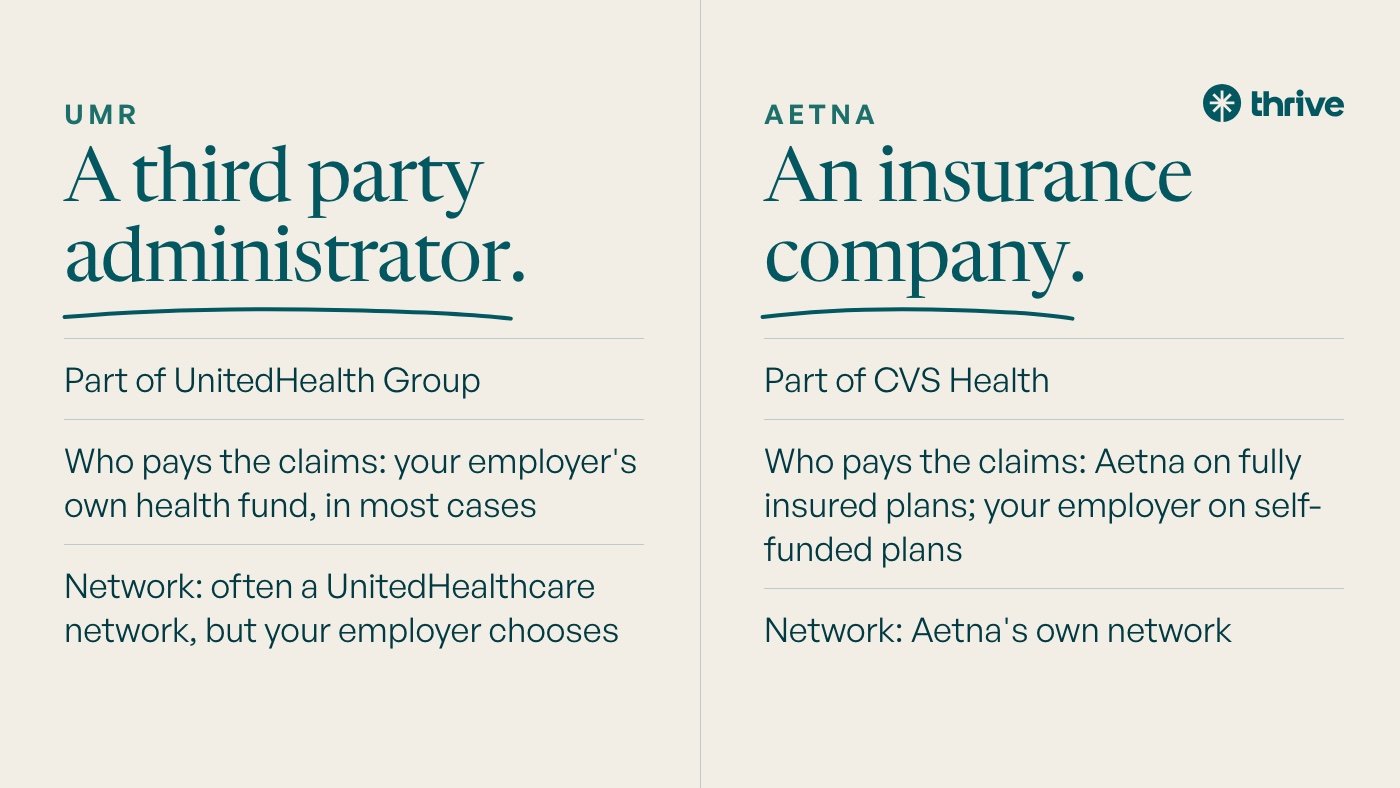
Here is the side by side view. Read every row with one caveat in mind: your employer’s plan document overrides any general rule.
| Question | UMR | Aetna |
|---|---|---|
| What it is | A third party administrator (TPA) that is part of UnitedHealth Group | An insurance company that is part of CVS Health |
| Who pays the claims | Your employer’s own health fund, in most cases | Aetna on fully insured plans; your employer on self-funded plans Aetna administers |
| Who sets the mental health benefits | Your employer, within federal rules | Aetna or your employer, depending on how the plan is funded |
| Network you usually use | Often a UnitedHealthcare network, but your employer chooses | Aetna’s own network |
| Behavioral health contact | The behavioral health number on your UMR card | Aetna Behavioral Health, via the number on your card |
| Prior authorization for IOP | Often required; check your plan | Often required; Aetna keeps a behavioral health precertification list |
What is UMR, and why does that matter for therapy?
UMR describes itself as the nation’s largest third party administrator, serving more than 3,800 benefit plans and about 6 million members as part of UnitedHealth Group. A third party administrator handles the paperwork of a health plan, but it usually does not own the risk.
That setup is called a self-funded or self-insured plan. HealthCare.gov defines a self-insured plan as one where the employer itself pays employees’ medical claims. The employer can then hire a third party administrator for enrollment, claims and provider networks.
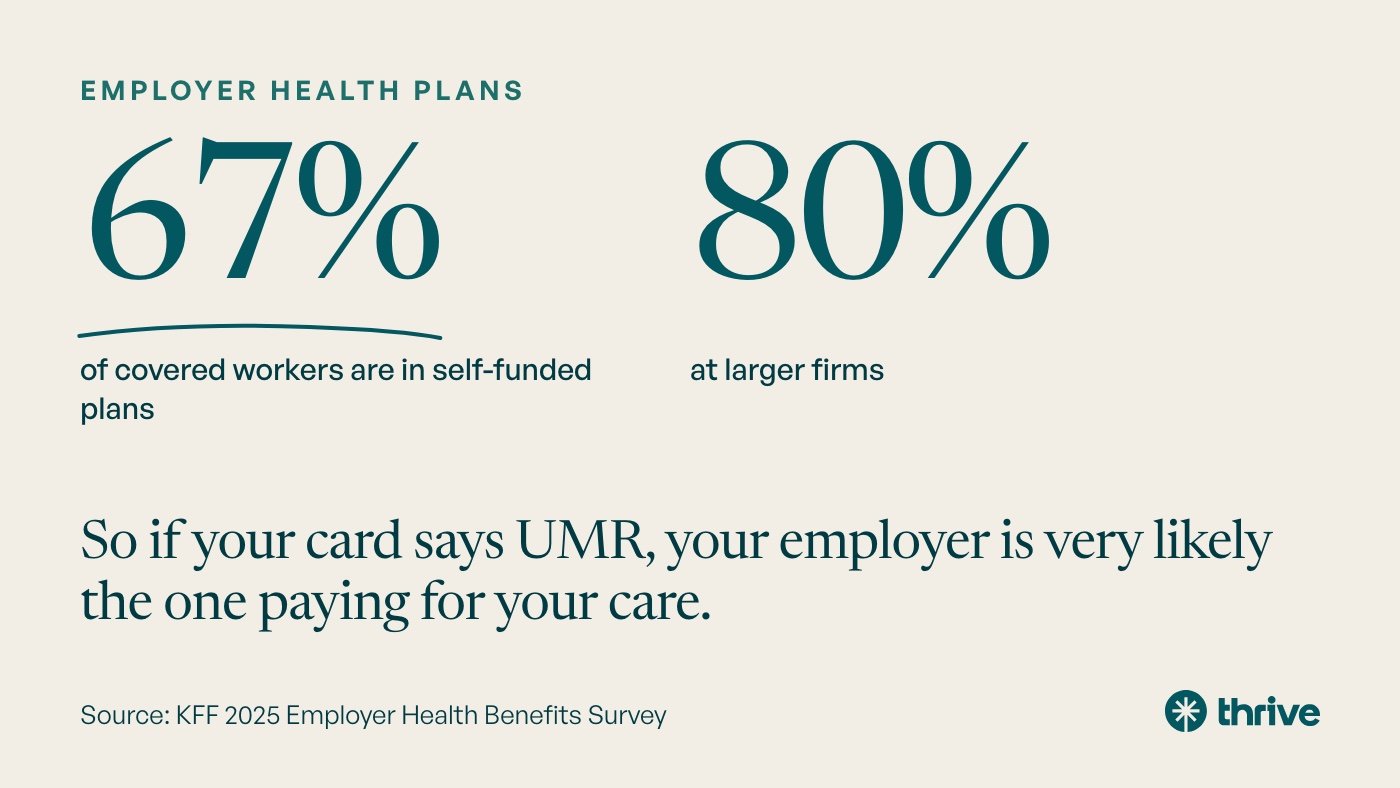
Self-funding is common at larger companies. The KFF 2025 Employer Health Benefits Survey found that 67% of covered workers are in self-funded plans, including 80% at larger firms. So if your card says UMR, your employer is very likely the one paying for your care.
- Your employer picks the benefits. Copays, deductibles and which services need approval come from the plan your employer designed.
- Your employer picks the network. Many UMR plans rent a UnitedHealthcare network, but some use a different one.
- UMR runs the day to day. It processes claims, answers member calls and keeps the provider directory.
What is Aetna’s role, and is it different?
Aetna is a CVS Health company that sells health insurance directly. Aetna can play two roles: insurer on a fully insured plan, or administrator on a self-funded plan.
On a fully insured Aetna plan, Aetna takes the financial risk and designs the benefit options your employer picks from. On a self-funded plan with Aetna as administrator, your employer pays the claims and Aetna runs the network and paperwork. In that second case, Aetna works much like UMR does.
Your card may not say which kind you have. Ask HR one question: “Is our plan fully insured or self-funded?” The answer tells you who to appeal to and which rules apply.
Who actually sets your mental health benefits?
On self-funded plans, the employer sets benefits within federal law. On fully insured plans, the insurer sets them and state insurance rules also apply. Either way, federal parity law sets a floor for mental health coverage.
The Mental Health Parity and Addiction Equity Act generally means mental health benefits cannot be more restrictive than comparable medical benefits. HealthCare.gov explains that parity protections cover financial limits, visit limits and care management rules like prior authorization.
In practice, parity means a plan cannot make therapy much harder to get than a comparable medical service. It does not mean every plan covers every program. Your Summary of Benefits and Coverage is still the document that answers “is this covered for me?”
Which network do you use with each card?
This is the question that most often decides what you pay. An in-network provider has a contract with your plan’s network; an out-of-network provider usually costs you more, or is not covered at all.
- UMR cards: The network name is usually printed on the front of the card. Many UMR plans use a UnitedHealthcare network, but always check, because your employer chose it.
- Aetna cards: The plan uses an Aetna network. The card shows the plan type, such as an HMO, PPO or a point of service plan, which affects referrals and out-of-network coverage.
Directories help, but they are not perfect. UMR’s own find a provider page warns that listings may not reflect every contracted provider. It advises calling the provider or the number on your ID card to confirm. A phone call with a reference number beats a screenshot of a directory.
Who handles behavioral health on each plan?
Many plans send mental health benefits to a specialty team. This team keeps the therapist network and reviews requests for higher levels of care, like IOP. When you call, ask for behavioral health by name, not general member services.
For UMR members, the behavioral health partner depends on the plan your employer set up. Plans that use UnitedHealthcare networks often route mental health through Optum, UnitedHealth Group’s behavioral health arm. Your card should list a behavioral health or mental health phone number; use that one.
For Aetna members, behavioral health is handled by Aetna Behavioral Health, part of Aetna itself. That means one company holds both your medical and mental health benefits, which can make calls simpler.
How does IOP get approved under UMR or Aetna?
An intensive outpatient program is a step up from weekly therapy. It typically means nine or more hours of structured care each week while you live at home and keep up daily life. Most commercial plans treat IOP as a level of care that needs prior authorization.
HealthCare.gov defines prior authorization as a decision by your plan that a service is medically necessary, made before you get it. Aetna publishes a precertification page that includes a separate Aetna Behavioral Health precertification list. UMR plans follow whatever approval rules your employer’s plan sets.
- A clinician assesses you and documents why a higher level of care makes sense.
- The program submits the request to the behavioral health team on your card.
- The plan reviews and approves a set number of days or sessions.
- The program asks for more time if you still need it, with progress notes.
Virtual IOP is a recognized option. A study in the Journal of Psychiatric Research compared telehealth with in-person care for adults in intensive treatment and found comparable results. You can learn more about how this level of care works on our intensive outpatient program page.
 Mental Health Coverage Made Simple (and Why Your Insurance Should Have It)Mental Health
How to read your card in two minutes
Pull out your card and look for five things. Each one answers a question you would otherwise wait on hold to ask.
- The logo: UMR or Aetna tells you who administers the plan.
- The network name: This tells you which provider network to search.
- The group number: This identifies your employer’s specific plan design.
- The behavioral health phone number: Call this for therapy and IOP questions.
- The plan type: HMO, PPO, EPO or POS shapes referrals and out-of-network rules.
If you want a deeper walk through, our guide on how to read mental health insurance benefits covers deductibles, coinsurance and out-of-pocket limits.
What to ask when you call
Use the behavioral health number on the back of your card. Write down the date, the representative’s name and a reference number for every call.
- “Is my plan fully insured or self-funded?”
- “Which network does my plan use for mental health?”
- “Is intensive outpatient care covered, and is telehealth IOP covered?”
- “Does IOP need prior authorization, and who submits it?”
- “What will I pay: deductible, copay or coinsurance, and how much is left on my out-of-pocket maximum?”
- “Do I have any out-of-network benefits for mental health?”
If a claim or approval is denied, you have the right to appeal. HealthCare.gov explains how to appeal a health plan decision, including an outside review in many cases. For self-funded plans, HR can tell you which appeal steps apply.
Common questions about UMR vs Aetna
Is UMR the same as UnitedHealthcare?
Not exactly. UMR is part of UnitedHealth Group and works as a third party administrator for employer plans. Many UMR plans use a UnitedHealthcare network, but your employer, not UMR, sets the benefits.
Is Aetna better than UMR for mental health?
Neither is better in general. Your employer’s plan design, the network you can use and your out-of-pocket costs matter far more than the logo on the card.
Does UMR cover intensive outpatient programs?
Many employer plans administered by UMR cover IOP when it is medically necessary, often with prior authorization. Because each employer designs its own plan, check your plan documents or call the behavioral health number on your card.
Does Aetna cover virtual IOP?
Many Aetna plans cover intensive outpatient care, and many cover it by telehealth. Approval rules vary, so ask whether your specific plan needs precertification.
Who do I appeal to if my UMR claim is denied?
Start with UMR, using the steps in your denial letter. Your employer’s HR team can explain any further steps that apply to your plan.
Does Thrive accept UMR or Aetna?
Thrive Mental Health works with most major commercial plans, and networks vary by plan and state. Check your plan or ask us to verify; the benefits check is free.
Next steps
If weekly therapy is not enough and you have a UMR or Aetna card, start with a benefits check specific to your plan. Thrive Mental Health is a Joint Commission accredited provider of virtual IOP for adults. We serve Florida, Indiana, Arizona, California, North Carolina, South Carolina and Texas. Our Aetna coverage page and our list of insurance companies explain more, and networks vary by plan, so we confirm yours before you start.
Verify your coverage with Thrive: free, confidential benefits check. Most members receive a summary within 24 hours, and you can start as soon as you are ready. Prefer to talk first? Call (561) 203-6085 or contact us.

This article is for informational purposes only and is not a substitute for individualized clinical advice or insurance verification.