


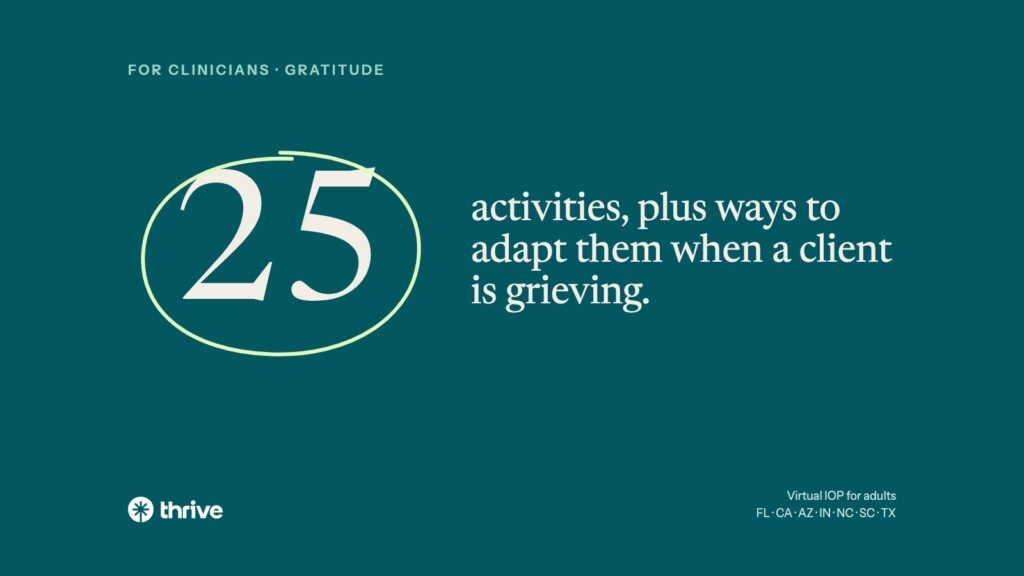

The best gratitude activities for adults are short, specific, and optional: a few minutes of noticing, naming, or thanking that a client can repeat outside session. Below are 25 gratitude activities for adult groups and individual therapy, each with steps and a facilitation note, plus ways to adapt them when a client is grieving or depressed. They are written for clinicians, group facilitators, and counselors in training, and every one works on video.
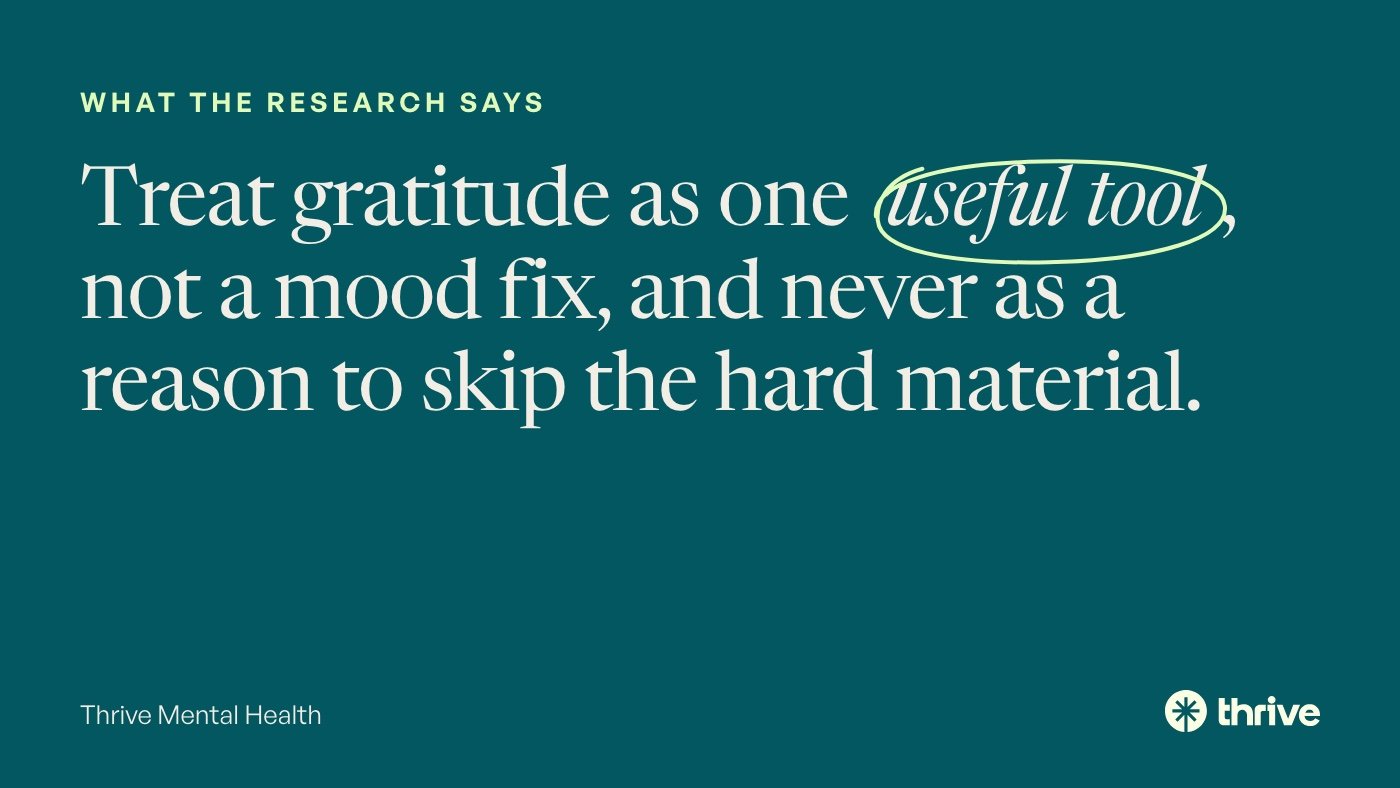
The evidence is real but modest, and it is worth saying so up front. A 2016 meta-analysis of gratitude interventions found small benefits for well-being. The benefits shrank when gratitude was compared with other active exercises. Treat gratitude as one useful tool, not a mood fix, and never as a reason to skip the hard material.
What does the research say about gratitude exercises?
Gratitude work has a longer research history than most worksheet trends. Here is the short, honest version.
- Weekly gratitude lists helped in early trials. In the “counting blessings” studies, adults who listed things they were grateful for reported more positive mood than comparison groups.
- Gratitude letters showed short bursts of benefit. A 2005 trial of positive psychology exercises found the gratitude visit lifted happiness for about a month. The “three good things” exercise lasted longer.
- It can help people already in therapy. A randomized trial with psychotherapy clients found that gratitude letter writing, added to counseling, was linked with better mental health weeks later.
- Effects on depression and anxiety are small. A 2023 systematic review and meta-analysis found gratitude work may modestly reduce anxiety and depression symptoms. It is an add-on, not a treatment by itself.
Even federal guidance keeps it simple. The National Institute of Mental Health self-care page suggests reminding yourself daily of things you are grateful for, and being specific.
Gratitude activities for individual sessions
1. Three good things. Each night, the client writes three things that went well and why. The “why” matters most. Note: ask for small, concrete items. “My coffee was hot” beats “my family”.
2. The gratitude letter. The client writes a letter to someone they never properly thanked. Sending it is optional. Note: read it aloud in session first, so feelings come up with support nearby.
3. Mental subtraction. The client picks one good thing and imagines life without it for two minutes. Then they describe what changed. Note: this often works better than listing for clients who find lists hollow.
4. Gratitude for the body. The client names one thing their body did today, such as walking to the mailbox. Note: useful for chronic pain clients, but skip it if body image is a live issue.
5. Savoring replay. The client picks a recent pleasant moment and retells it slowly, with senses and details. Note: it builds attention to good moments without asking anyone to feel thankful on command.
6. Gratitude for a past self. The client thanks a younger version of themselves for something that got them here. Note: this pairs well with self-compassion work.
7. The unnoticed helpers list. The client lists people who helped this week without being thanked: a bus driver, a coworker, a pharmacist. Note: it widens attention outward for clients stuck in self-focus.
8. Values-linked gratitude. The client names something they are grateful for, then names the value it reflects. Note: this bridges gratitude into values work in ACT or CBT.
Gratitude activities for adult groups
9. One-word round. Each member names one small thing from the past day in a single word. Passing is allowed. Note: a low-pressure opener for new groups.
10. Gratitude wall. Members post short notes on a shared board or document through the week. Read a few aloud at the close. Telehealth: use a shared slide or the chat.
11. Pass the appreciation. Each member names one specific thing another member said or did that helped them. Note: set the rule that every member receives at least one, so nobody is left out.
12. Object story. Members bring an object they are grateful for and tell its story in one minute. Telehealth: anything within reach of the camera works.
13. Gratitude and struggle pairs. Members name one hard thing and one good thing from the week, in that order. Note: naming the struggle first keeps the exercise honest.
14. Group thank you card. The group writes a card to someone outside the room, such as a nurse or a sponsor. Note: shared effort builds cohesion with less personal exposure.
15. Gratitude in the room. At the last session of a cycle, members name what they valued about the group itself. Note: a natural closing ritual for any skills group.
16. Gratitude charades. Members act out a small daily pleasure while others guess. Note: light and playful, good for groups that run heavy.
17. Five senses scan. The facilitator leads a guided two minute scan: one thing you see, hear, feel, smell, and taste that you are glad for. Note: it doubles as a grounding skill.
Gratitude activities clients can do between sessions
18. Gratitude walk. A ten minute walk noticing three pleasant things. Note: adds movement and daylight.
19. Weekly, not daily, journal. One entry a week, listing five things. Note: weekly often keeps the practice fresh, so it does not turn into a chore.
20. Photo a day. One photo daily of something worth keeping. Review the set in session. Note: good for clients who dislike writing.
21. Gratitude text. One short thank you text a week to a different person. Note: this builds connection, which isolated clients often need most.
22. Bedtime “one good thing”. Before sleep, name one good moment out loud or in mind. Note: the smallest version for the lowest energy weeks.
23. Gratitude jar. A note in a jar whenever something good happens, read monthly. Note: helpful for clients who forget good weeks when the next bad one arrives.
24. Anticipation list. The client lists three things they are looking forward to this week. Note: future-focused, and it gently supports behavioral activation.
25. Kindness given back. One small act of kindness each week, then a note on how it felt. Note: it turns gratitude into action, which some clients find more natural.
 Key Indicators of Spectrum Disorder: What to Look Out ForCoping Strategies
How to adapt gratitude work for grief and depression
Gratitude asked for too early can feel like being told to cheer up. That is toxic positivity, and it can damage trust. These adaptations keep the work honest.
| Client situation | What to avoid | Try instead |
|---|---|---|
| Recent loss | Lists of blessings, “at least” framing | Gratitude for the person lost (#2 as an unsent letter) |
| Moderate depression | Daily lists that feel like homework | Bedtime one good thing (#22) or savoring (#5) |
| Anhedonia | Asking how grateful they feel | Noticing tasks, such as the five senses scan (#17) |
| Trauma history | Gratitude toward people who caused harm | Gratitude for a past self (#6) or a safe place |
| Chronic illness or pain | “Be thankful it is not worse” | Struggle and gratitude pairs (#13) |
Three rules for every adaptation:
- Validate first. Name what is hard before any gratitude prompt.
- Make it optional. A client who says “I have nothing” has given you useful clinical data, not a failed exercise.
- Shrink the ask. One small thing beats five forced ones.
If a client’s depression is deepening despite good work, gratitude is not the lever. Our pages on depression care and CBT in a virtual IOP describe what a higher level of care adds.
How do you run gratitude activities on telehealth?
- Use the chat for rounds. Members type their item, then the facilitator invites two or three to expand.
- Use shared documents. A gratitude wall on a shared slide works as well as a corkboard.
- Use the home setting. Ask members to show an object in their room. It brings real life into the session.
- Keep turns named. Call the next speaker so quiet members are invited, not skipped.
Virtual delivery holds up for structured work. A study of adults seeking intensive treatment found telehealth outcomes comparable to in-person care. Gratitude and mindfulness also pair well; see our mindfulness and meditation page.
Common questions about gratitude activities for adults
How often should clients practice gratitude?
Once or a few times a week is a good start. Daily practice can turn into a chore that clients quietly drop.
Can gratitude exercises make depression worse?
They can feel invalidating if pushed too early. Validate the pain first, keep it optional, and shrink the ask.
Do gratitude activities work in groups?
Yes. Group formats add connection, and appreciation rounds can build cohesion. Always allow members to pass.
How long should a gratitude activity take in session?
Five to fifteen minutes, including debrief. Most work best as an opener or a closing ritual.
Is gratitude a replacement for treatment?
No. Research shows small benefits. It works best alongside therapy, not instead of it.
For clinicians: when gratitude work is not enough
Some clients need more than a weekly session and a gratitude jar. Symptoms are rising, daily life is slipping, and the gap between sessions undoes the work. That is when an intensive outpatient program can help, with nine or more hours of structured care each week. Learn how our virtual IOP works.
Thrive Mental Health runs adult-only virtual IOP in Florida, Indiana, Arizona, California, North Carolina, South Carolina, and Texas. See our Florida and Texas pages. We are accredited by The Joint Commission for Behavioral Health Care and Human Services, and we specialize in adults. Refer a patient here, or reach our clinical team at (561) 203-6085. Referred patients are typically assessed within days, and we coordinate care back to you at discharge.

This article is for informational purposes only and is not a substitute for individualized clinical advice or insurance verification.